Introduction
In the modern digital landscape, the term “Dark Web” often evokes images of mystery, underground activity, and hidden layers of the internet. For students, technology enthusiasts, and general users, the concept can be confusing and sometimes intimidating. Understanding the Dark Web is not just about satisfying curiosity; it is a fundamental part of digital literacy and cybersecurity awareness. By demystifying this hidden segment of the network, we can better understand how internet privacy works, the risks associated with anonymity, and how to maintain overall digital safety.
What is the Dark Web?
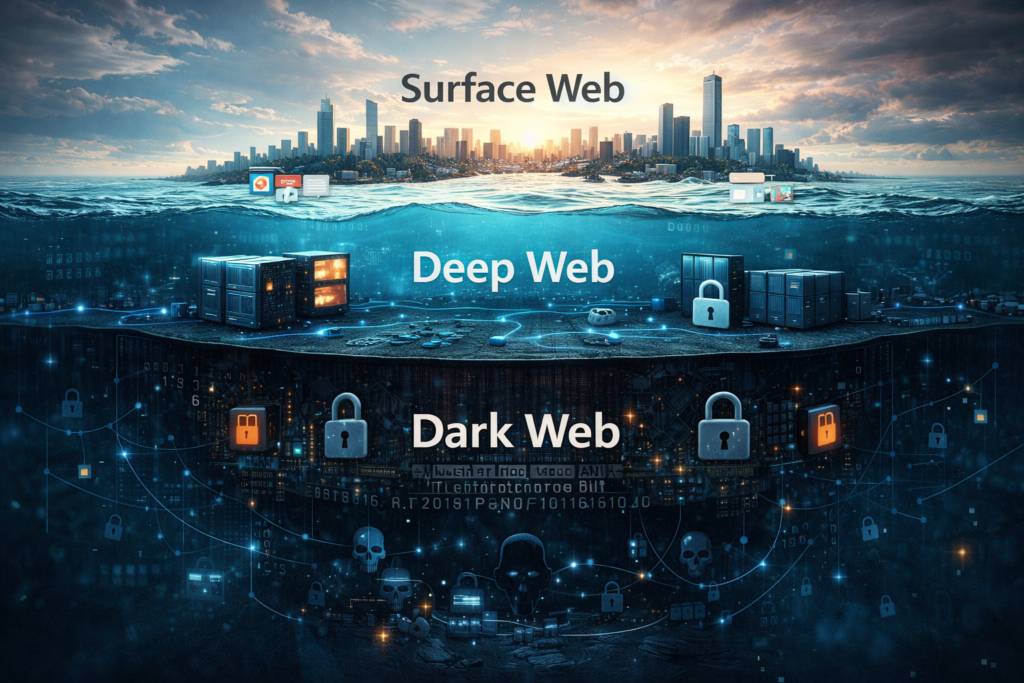
To define the Dark Web, we must first distinguish it from other parts of the internet. The Surface Web is the portion of the internet most people use daily, consisting of websites indexed by search engines like Google. Below that is the Deep Web, which accounts for the vast majority of the internet; this includes password-protected content like your email inbox, banking portals, and private databases. The Dark Web is a small, intentional subset of the Deep Web that is hidden from search engines and requires specific software to access. It was originally developed to provide a secure environment for anonymous communication, which remains its primary technical purpose today.

How the Dark Web Works?
The technical backbone of the Dark Web is built on a concept known as “Onion Routing.” When you access a standard website, your computer connects directly to a server, leaving a digital trail of your IP address. On the Dark Web, specifically through the Tor (The Onion Router) network, your data is wrapped in multiple layers of encryption, much like the layers of an onion. As your data travels through the network, it passes through several volunteer-run servers called nodes. Each node only unwrap one layer of encryption to know where to send the data next, ensuring that no single point in the chain knows both the source and the destination of the traffic.
This decentralized routing system effectively masks the user’s identity and location. Because the traffic is bounced around the globe and encrypted at every step, it becomes extremely difficult for third parties to monitor or trace specific activities back to an individual. This high level of anonymity is why the Dark Web is used by those seeking total privacy, though it also contributes to the network’s reputation for being a difficult environment to regulate or police.
Who Controls the Dark Web?
One of the most significant aspects of the Dark Web is that no single entity, government, or corporation controls it. It is a decentralized network, meaning it operates across thousands of independently owned servers worldwide. There is no central authority to set rules, verify users, or shut down websites. While the software used to access it, such as the Tor Browser, is maintained by non-profit organizations, they do not have the power to control what happens within the network itself. This lack of centralized governance is what provides both its greatest strength for privacy and its greatest weakness regarding safety.

How the Dark Web Can Be Controlled?
While the network itself is decentralized, it is not entirely outside the reach of the law. International law enforcement agencies, such as the FBI and Europol, use highly advanced cybersecurity techniques to monitor illegal activities. They employ ethical hackers and digital forensics experts to identify patterns, infiltrate criminal forums, and track financial transactions made through cryptocurrencies. Because the entry and exit points of the network are still connected to the broader internet, authorities can sometimes use traffic analysis to find the physical location of servers hosting illegal content.

Control is also exercised through international cooperation and user education. Governments work together to take down large-scale illegal marketplaces, and cybersecurity firms continuously update threat intelligence to protect the general public.
- Law enforcement agencies utilize undercover operations and sophisticated “honeypots” to trap individuals engaging in illegal transactions.
- International treaties and cybersecurity laws allow for the cross-border tracking of severe digital crimes, ensuring that anonymity does not equate to immunity.
Accessing the Dark Web for Awareness
Access to the Dark Web is usually achieved through specialized software like the Tor Browser. This browser is a modified version of standard web browsers that connects automatically to the Tor network. While the software itself is legal in most countries and is used by journalists, activists, and privacy advocates to bypass censorship, accessing the Dark Web is not without risk. Simply entering this space can flag your connection to internet service providers or security agencies in certain jurisdictions. It is crucial to understand that while the tools are available, they are intended for specialized privacy needs, not for casual exploration
Risks and Reality of the Dark Web
The Dark Web is far from the cinematic version often portrayed in media; it is frequently slow, unreliable, and filled with malicious content. For the average user, the risks are substantial. Most websites on the Dark Web are unmonitored and unregulated, making them breeding grounds for malware, phishing scams, and identity theft. Without the safety filters found on the Surface Web, a user can inadvertently download harmful software that can compromise their entire home network or lead to the theft of sensitive personal information.
Furthermore, there is a significant legal risk. Many websites on the Dark Web host illegal content or offer prohibited services. Accidentally clicking on a link or landing on a page containing illegal material can have serious legal consequences, even if the user had no criminal intent. The lack of “terms of service” or consumer protections means that if you are scammed or hacked, there is no recourse or authority to help you recover your losses.
Conclusion
The Dark Web serves as a powerful reminder of the complexities of the digital age. While it offers a sanctuary for those needing extreme privacy and freedom of speech in oppressive environments, it also harbors significant dangers for the uninformed. As responsible internet users, our focus should remain on ethical digital practices and maintaining high standards of cybersecurity on the Surface Web. Understanding the Dark Web is an important step in recognizing why we must value and protect our digital identities through safe, legal, and transparent means.